The Neurobiology of Psychotherapy: How Psychological Change Becomes Biological Change
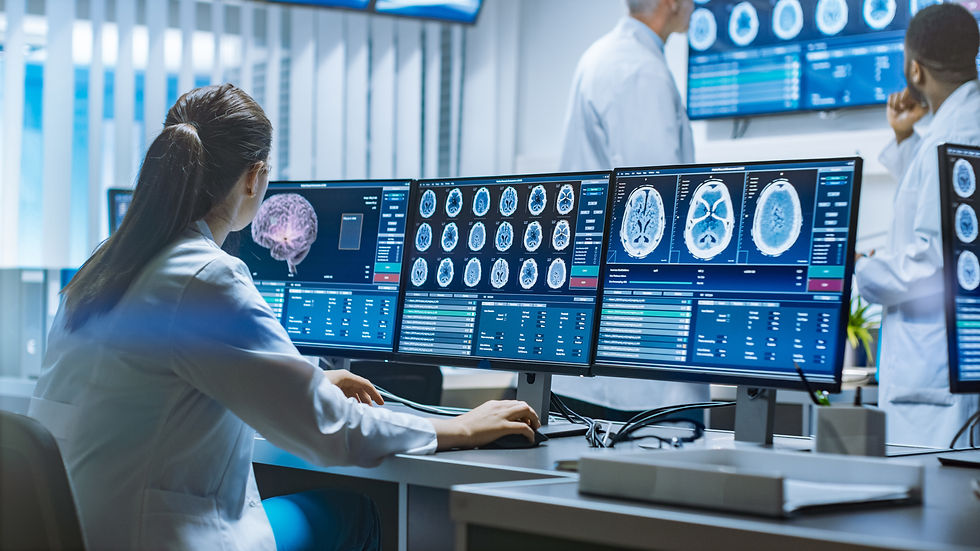
Psychotherapy is often described as a “talking treatment,” which can obscure the extent to which it produces measurable biological effects. However, research in Neuroscience, Psychoneuroendocrinology, and Interpersonal Neurobiology consistently demonstrates that psychotherapy induces changes across neural, hormonal, and autonomic systems. Rather than being purely cognitive, psychotherapy is best understood as an experience-dependent biological process that modifies brain function and structure.
Neuroplasticity as the foundation of therapeutic change
The central mechanism underlying psychotherapy is Neuroplasticity. At the synaptic level, repeated activation leads to long-term potentiation (LTP) and long-term depression (LTD), strengthening or weakening neural pathways over time. Maladaptive emotional and behavioral patterns such as hypervigilance or affect dysregulation - reflect well-established neural networks shaped by past experiences. Psychotherapy introduces new patterns of processing that, through repetition, reshape these networks.
Corticolimbic regulation: restoring top-down control
Emotional regulation depends on interactions between cortical and limbic systems, particularly the Amygdala and the Prefrontal cortex. In anxiety, depression, and trauma-related conditions:
amygdala activity is increased
prefrontal regulatory control is reduced
Psychotherapy has been shown to:
decrease amygdala reactivity
increase prefrontal engagement
strengthen functional connectivity between these regions
This reflects improved top-down regulation of emotional responses.
Autonomic and endocrine regulation
Psychotherapy also influences physiological stress systems, particularly the Autonomic nervous system and the hypothalamic–pituitary–adrenal (HPA) axis.
Chronic stress is associated with dysregulated Cortisol secretion and reduced parasympathetic activity. Therapeutic processes contribute to:
reduced baseline arousal
improved stress hormone regulation
increased parasympathetic (vagal) tone via the Vagus nerve
Memory reconsolidation and emotional updating
A central mechanism in therapeutic change is - Memory reconsolidation. When reactivated, memories become temporarily modifiable. Psychotherapy leverages this process by pairing previously encoded emotional experiences with new, corrective contexts (e.g., safety, agency, attunement), allowing the memory to be reconsolidated with altered emotional meaning.
The neurobiology of the therapeutic relationship
The therapeutic relationship itself constitutes a biological mechanism of change.
Attuned interpersonal interaction influences:
Oxytocin (increasing trust and social bonding)
Cortisol (reducing stress responses)
autonomic regulation via vagal pathways
Repeated exposure to a consistent and non-threatening relational environment generates prediction error, leading to gradual updating of internal models of others, particularly in individuals with relational trauma.
Network integration and contextual processing
Trauma is associated with disrupted integration between key brain regions, including the Hippocampus, amygdala, and prefrontal cortex.
This contributes to:
impaired contextualization
emotional re-experiencing
persistent threat perception
Psychotherapy enhances connectivity across these regions, supporting integration of emotional and cognitive processes and improved temporal encoding (“this happened in the past” rather than “this is happening now”).
Predictive processing and learning
The brain continuously generates predictions about incoming stimuli. In trauma and anxiety, these predictions are biased toward threat. Psychotherapy introduces repeated discrepancies between expected and actual outcomes (prediction errors), which drive updating of internal models and reduce threat expectancy over time.
Conclusion
Psychotherapy is a biologically active process operating through identifiable mechanisms: neuroplasticity, corticolimbic regulation, autonomic and endocrine modulation, memory reconsolidation, and relational co-regulation.
These processes produce measurable changes in brain function, physiological regulation, and emotional experience - demonstrating that psychological healing is, fundamentally, biological change.
References
Eric Kandel (1998). A new intellectual framework for psychiatry. American Journal of Psychiatry.
Joseph LeDoux (2000). Emotion circuits in the brain. Annual Review of Neuroscience.
Karim Nader et al. (2000). Fear memories require protein synthesis in the amygdala for reconsolidation. Nature.
Bruce McEwen (2007). Physiology and neurobiology of stress and adaptation. Physiological Reviews.
Kevin Ochsner & James Gross (2005). The cognitive control of emotion. Trends in Cognitive Sciences.
Helen Mayberg (2002). Modulating dysfunctional limbic-cortical circuits in depression.
Stephen Porges (2011). The Polyvagal Theory.
Allan Schore (2003). Affect Regulation and the Repair of the Self.
Bessel van der Kolk (2014). The Body Keeps the Score.
Daniel Siegel (2012). The Developing Mind.
Ruth Feldman (2012). Oxytocin and social affiliation in humans.
Karl Friston (2010). The free-energy principle: a unified brain theory? Nature Reviews Neuroscience.
Bruce Ecker et al. (2012). Unlocking the Emotional Brain.


